Monitoring and tracking3 min read
Sensors for indoor farms: what to measure, and where
Start with air temperature and humidity in every growing zone, plus pH, EC and temperature in each water system. Add CO₂ and light next, then electricity per floor or container. Put air sensors at plant height, in the middle of the zone, away from lights, vents and walls, and check water probes against calibration solutions regularly.
Which sensors does an indoor farm need first?
Start with the readings that explain most problems:
| Measure | Why | Priority |
|---|---|---|
| Air temperature | Growth speed, stress, cooling problems | First |
| Relative humidity | Disease risk, how fast plants use water | First |
| pH (water) | Whether roots can take up nutrients | First |
| EC (water) | How much nutrient is in the water | First |
| Water temperature | Root health and oxygen in the water | First |
| CO₂ | Growth speed in a closed room | Next |
| Light (PPFD) at plant level | Whether each floor gets its recipe | Next |
| Electricity per floor or container | Energy per kg | Next |
| Tank level and water use | Leaks, water per kg | Later |
| Door open/closed | Heat and humidity coming in | Later |
Where should sensors go?
Put each sensor where it reads what the plants feel:
- Air sensors at plant height, in the middle of the zone, not next to a light, a vent, a door or a wall.
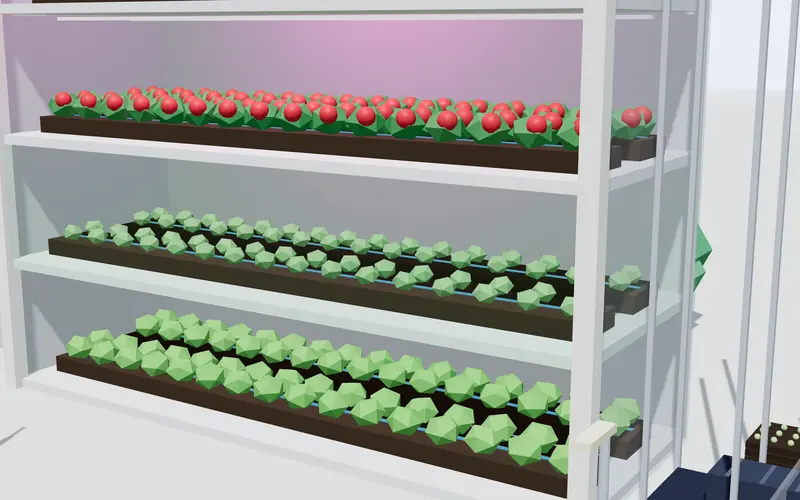
- In tall racks, read the top, middle and bottom at least once, because conditions can differ by level.
- Water probes in the tank or return line where the solution is well mixed, not right at the dosing point.
- Light readings at the top of the plants, at several points across the rack, since light is weaker at the edges.
How many sensors do you need?
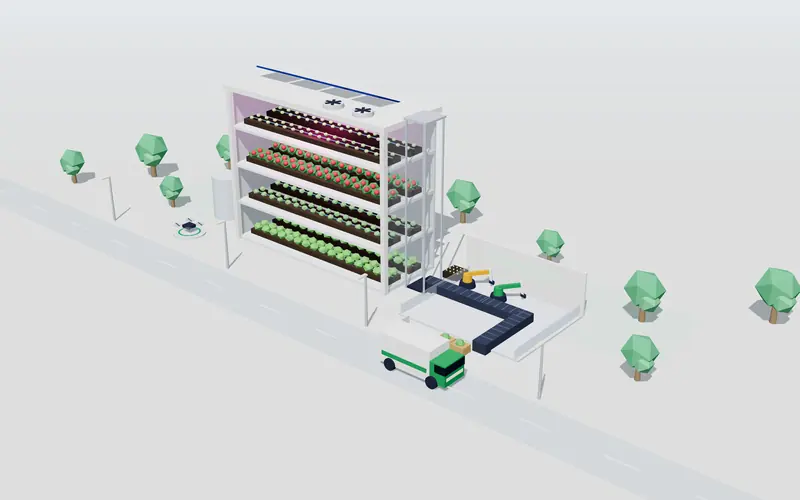
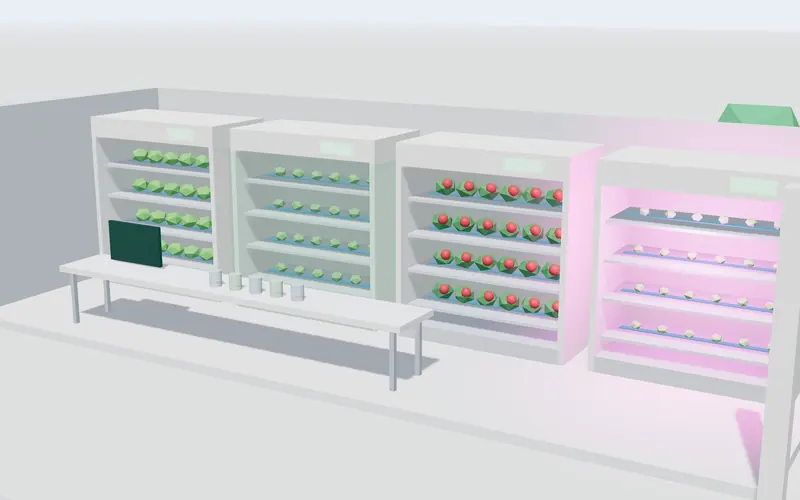
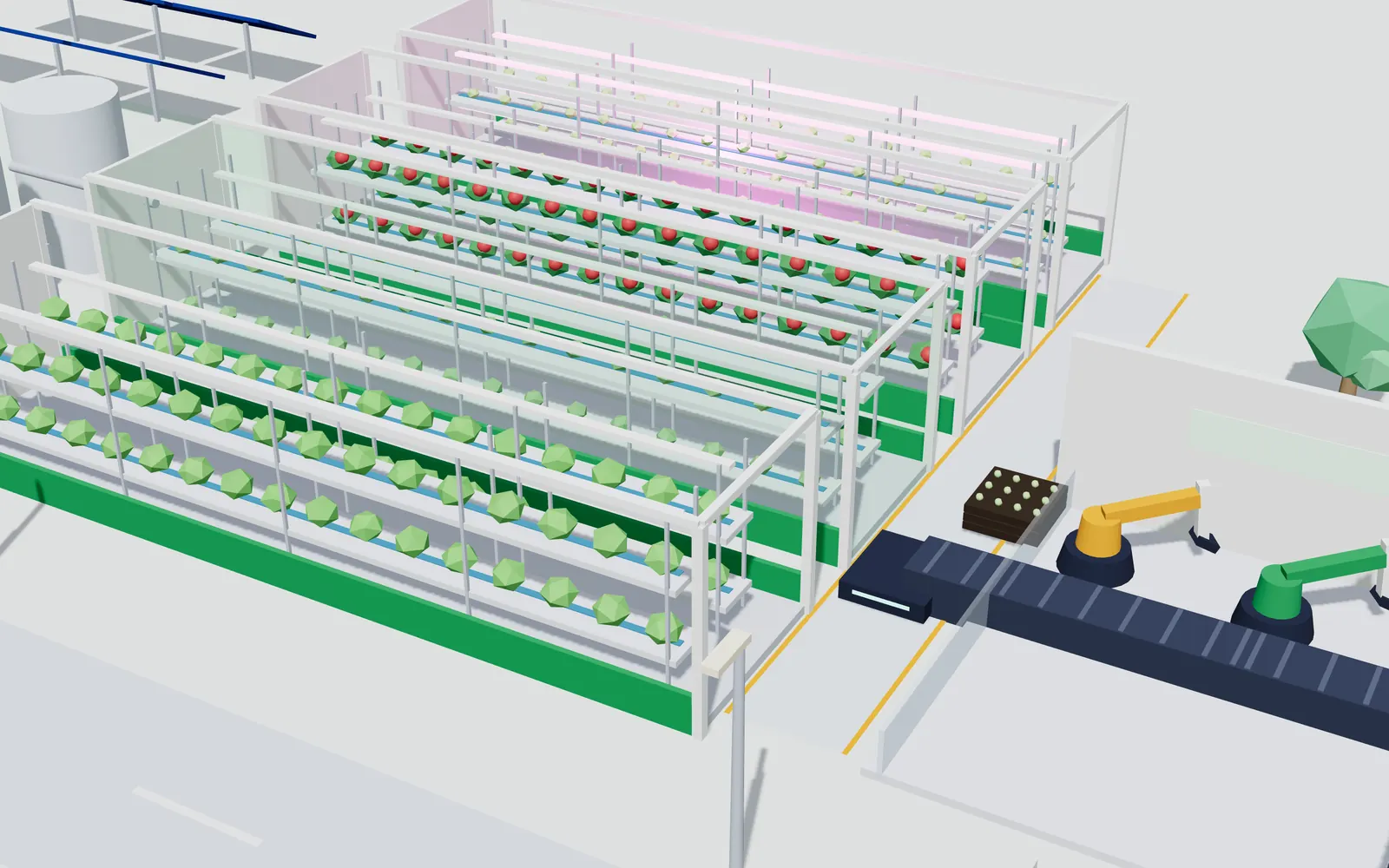
At least one air sensor per zone that can behave differently: each container, each floor of a vertical farm, each greenhouse bay, each lab chamber. One water set per separate water system. If two places always read the same, one sensor is enough; if they differ, each needs its own.
How do you keep sensors accurate?
Sensors drift slowly, so a wrong reading can look normal:
- Check pH and EC probes against calibration solutions on the schedule the maker recommends, and log each check.
- Compare air sensors with a handheld reference now and then.
- Keep probes clean; algae and salt build-up skew readings.
- Note every sensor change or move, so a sudden jump in the data isn't mistaken for a crop problem.
Which alerts should you set?
Alerts should be few and meaningful, or people stop reading them:
- Temperature or humidity outside the crop's range for more than a few minutes.
- pH or EC outside range in any system.
- A sensor that stops reporting.
- Cooling failure or power cut. See indoor farming in the Gulf heat.
Can you start without sensors?
Yes. A handheld thermometer, a pH and EC pen and a notebook, read at the same time every day, will show most problems. Sensors make it automatic and catch what happens at night. Start with the routine, then automate it.
How does Lamina help?
Lamina pins each reading to the place it's measured in a live 3D view of your farm, so a warm floor or a drifting container shows up where it is. It works with readings you enter by hand and with sensor data. See it in the live demo, or read what a digital twin for a farm is.