Monitoring and tracking3 min read
How to track a vertical farm from seed to delivery
To track a vertical farm from seed to delivery, give every batch one ID when it's seeded and record five moments against it: seeding, moving to its growing spot, harvest, packing and delivery. Add where the batch grew, and you can trace any box back to its seed.
Why seed-to-delivery tracking matters
Tracking each batch from seed to delivery lets you answer the questions customers, auditors and your own team ask, without guessing:
- Where did this box come from, and when was it harvested? Retail buyers and food-safety audits often ask.
- Why was this batch weaker than the last one? You can compare the conditions each one grew in.
- What can we promise next week? You can see what's due for harvest on every floor.
- Which floor, recipe or variety yields best? You get real weights per batch, not estimates.
The five moments to record
Record each batch at five moments, and write the same batch ID every time:
- 01
Seed
Date, crop and variety, seed lot, number of trays, and the new batch ID.
- 02
Move
When the trays go to their growing spot: which floor, rack or channel, and when.
- 03
Harvest
Date, weight, quality grade, and how much was thrown away.
- 04
Pack
Which crates or boxes the batch went into, and their IDs.
- 05
Deliver
Customer, dispatch time and, for chilled goods, the temperature on dispatch.
Give every batch one ID
A batch ID only works if it never changes from seed to delivery. Make it readable, so the team can say it out loud: for example B‑1014‑BAS‑03 for the third basil batch seeded on 14 October.
Print it on the tray label. A QR code next to it saves typing later, but plain text is enough to start.
Tie each batch to where it grows
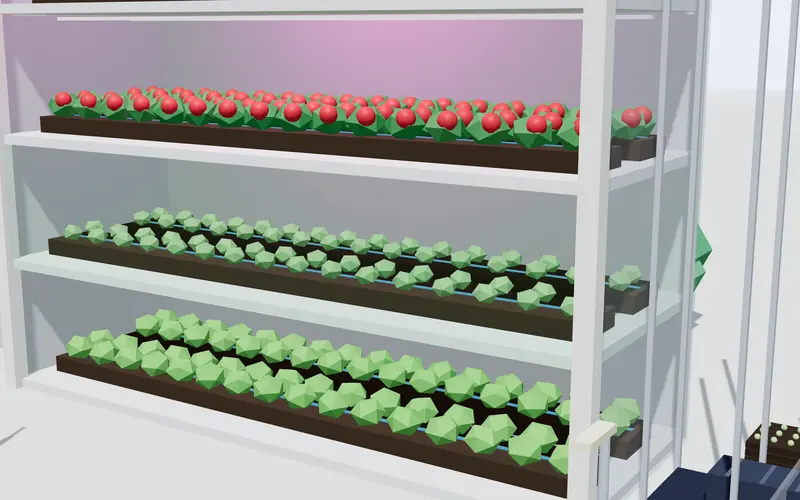
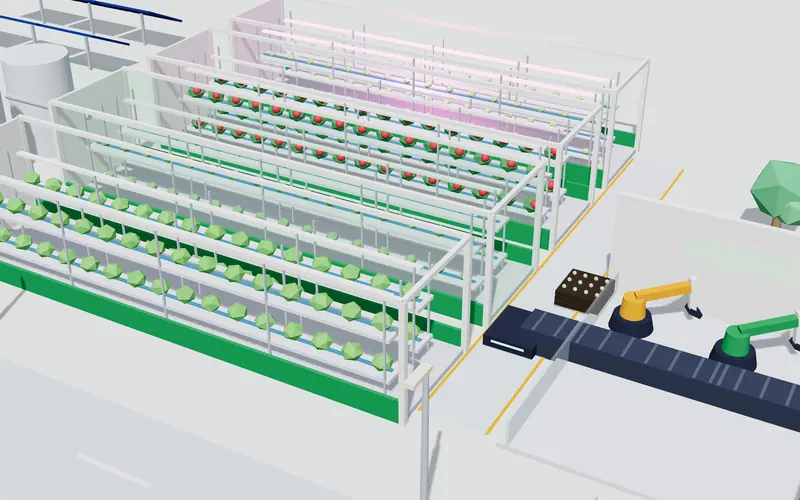
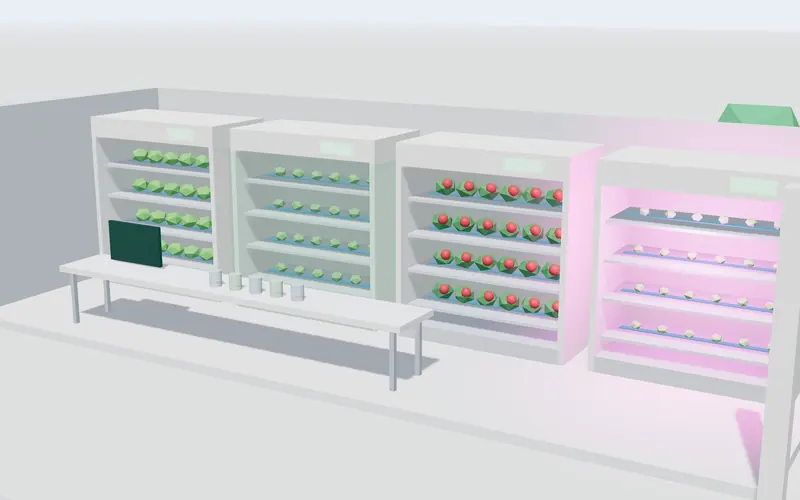
In a vertical farm, where a batch grows matters, because conditions can differ between floors and between the front and back of a rack. Warm air rises, airflow is rarely even, and lights age at different speeds.
If you record the floor and rack when a batch moves, every climate, water and light reading from that spot belongs to the batch. That's what lets you explain a weak harvest weeks later.
A simple spreadsheet to start with
One row per batch is enough to start. These columns cover the five moments:
| Batch ID | Crop | Seeded | Floor / rack | Harvested | Weight (kg) | Packed in | Delivered to |
|---|---|---|---|---|---|---|---|
| B‑1014‑BAS‑03 | Basil | 14 Oct | F2 / R4 | 8 Nov | 11.6 | C‑221, C‑222 | Customer A |
Example row with made-up values.
Common mistakes
Most tracking breaks down in the same few places:
- A new ID at every stage, so nobody can join seeding to delivery.
- Writing everything at the end of the day, from memory.
- Not recording waste, so yields look better than they are.
- Each team keeping its own file: growing in one sheet, packing in another.
Where a digital twin helps
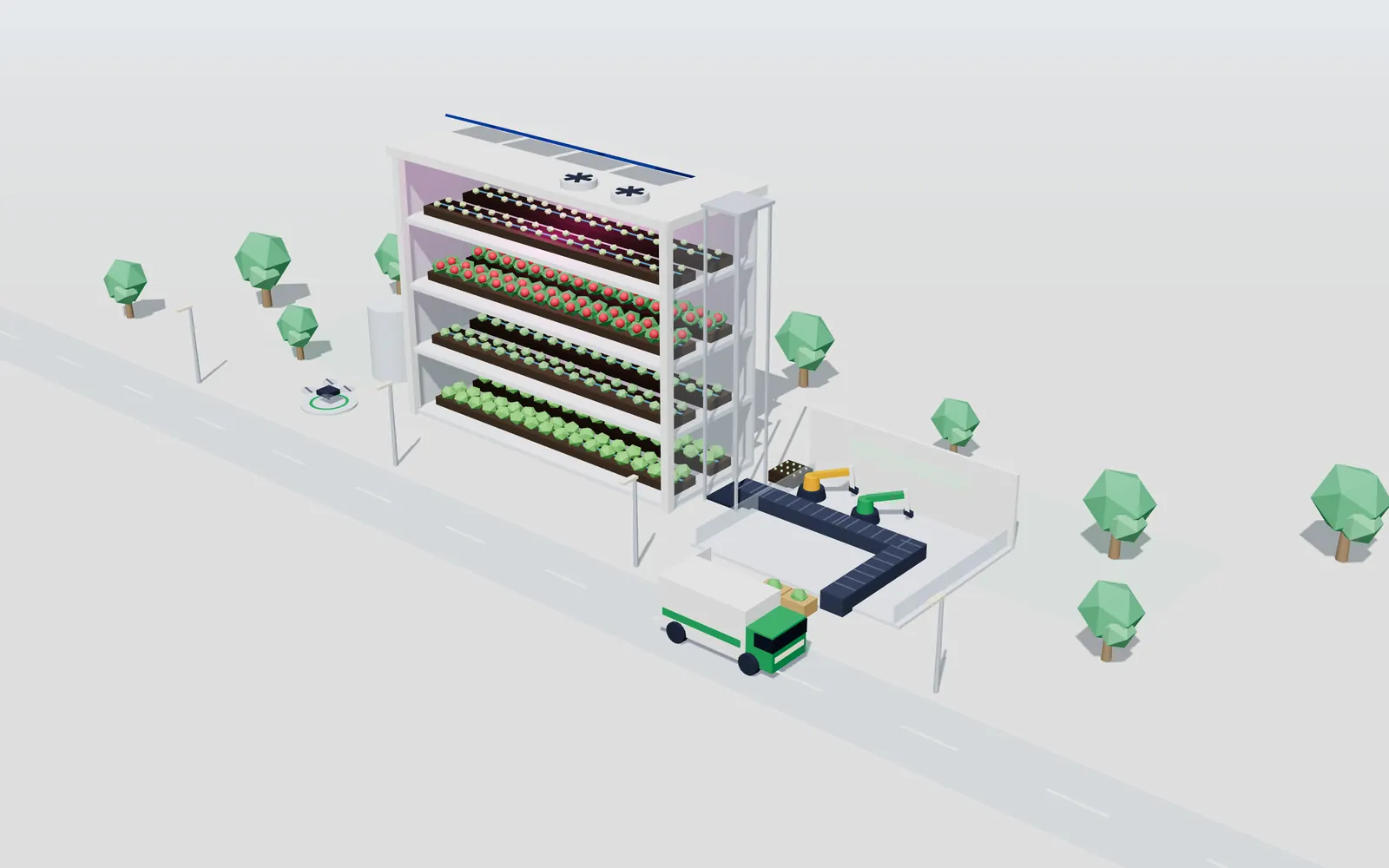
A spreadsheet tells you what happened; a digital twin also shows each batch on the floor where it's growing. In Lamina, the Seed to plate panel follows every batch through seeding, growing, harvest, packing and delivery, with a live log, and the 3D view shows where each one sits today.
Open the demo and press Seed to plate to see it with sample batches.